Top Radio Stations for Gengetone and Urban Music in Kenya

On 31 May 2018, four young men from Umoja who went by Seska, Zilla, Rekless, and Swat uploaded a song called "Lamba Lolo" to YouTube. Nobody at any Nairobi radio station had a category for what they had made. It was not quite Genge, the hip-hop-and-dancehall hybrid that Jua Cali and Nonini had built a decade earlier at Calif Records. It was something rowdier, younger, and unapologetically explicit — built for matatu speakers and phone screens before it was ever built for FM. Within a year, the genre had a name. Gengetone. And Kenyan radio had a problem: an entire generation was listening to music the stations weren't playing.
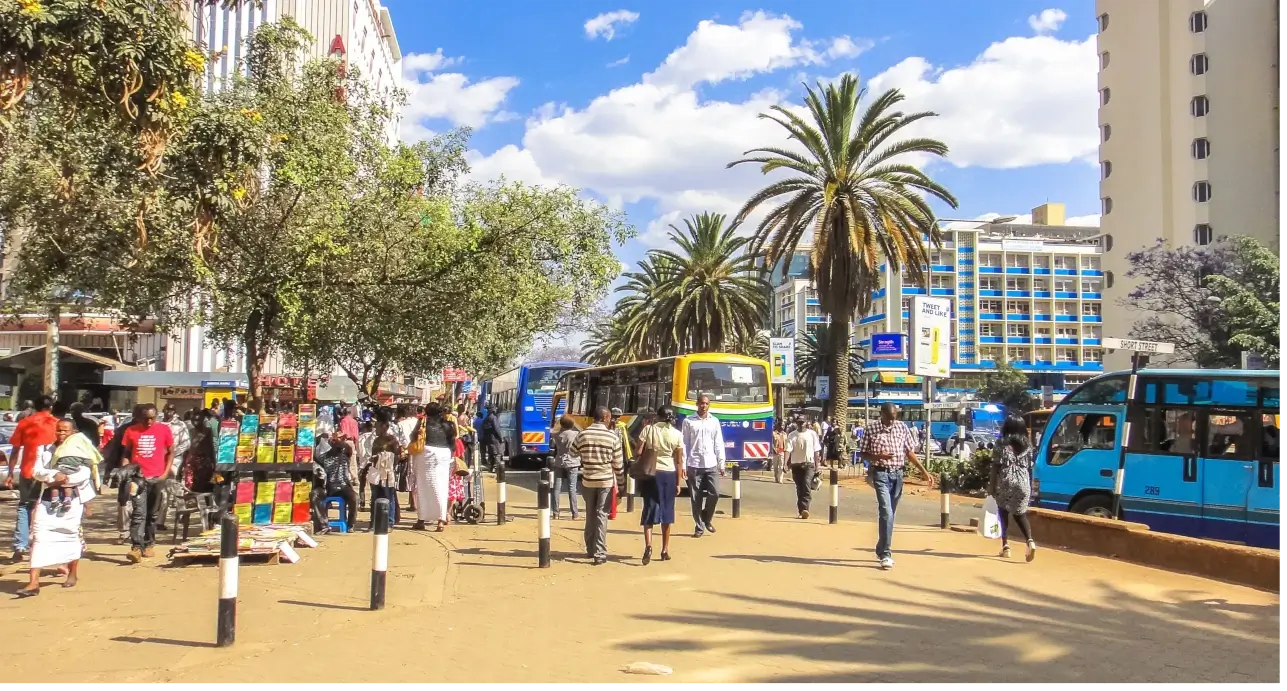
I remember the exact bus where I first heard "Wamlambez." It was a 32-seater matatu on Jogoo Road, sound system rattling the window frames, and the conductor had the volume so high that conversation was pointless. Sailors' call-and-response hook — "wamlambez," answered by a chorus of "wamnyonyez" — was already public property by the time it reached a radio playlist. The street had finished the job radio was supposed to start.
This article is about how Kenyan radio caught up to that street — which stations did it first, which still carry the torch for Gengetone and the genres that followed it, and where you can stream urban Kenyan music live right now.
What Is Gengetone? A Quick Definition
Gengetone is a Kenyan urban music genre that emerged from Nairobi's Eastlands estates around 2018, built on a dembow-style reggaeton and dancehall groove, chantable call-and-response hooks, and uncompromising Sheng lyrics. It evolved directly from Genge, the Sheng-based hip-hop sound pioneered in the 2000s by Calif Records artists like Jua Cali and Nonini.
The genre's defining traits are its raw, often explicit storytelling about street life, its DIY production values, and its crew-based structure — most Gengetone acts perform as collectives rather than solo artists. Pioneering groups include Ethic Entertainment, Sailors, Boondocks Gang, Ochungulo Family, Mbogi Genge, and Zzero Sufuri.
The Origins: From Genge to Gengetone
To understand how Kenyan radio responded to Gengetone, you need the genre's backstory.
Genge was born in the 2000s, popularised by the Nairobi-based label Calif Records and fronted by artists like Jua Cali and Nonini. At the time, Kenyan radio stations referred to homegrown music simply as "local music" — there was so little Kenyan content getting airplay that artists coined "Genge" partly to give their own sound a distinct identity worth naming.
By the mid-2010s, cheap home studios, YouTube, and WhatsApp-based file sharing had lowered the barrier to entry for young crews to record and circulate their own tracks without needing a label or a radio slot at all. Ethic Entertainment's "Lamba Lolo" in 2018 crystallised the blueprint: a dembow beat, a chantable hook, and raw Sheng lyricism. A wave of crews followed fast — Sailors, Ochungulo Family, Boondocks Gang, Zzero Sufuri, Mbogi Genge, and Gwaash — delivering club-ready anthems built for matatu sound systems and TikTok-style dance challenges before they were ever built for a studio playlist.
The #PlayKeMusic Movement
Gengetone's explosion onto Kenyan radio did not happen by accident. In 2019, Kenyan musicians and fans launched the #PlayKeMusic campaign, publicly criticising local DJs and radio stations for giving more airtime to Nigerian Afrobeats and Tanzanian Bongo Flava than to homegrown Kenyan music. The pressure worked. Backed by matatu operators and DJs who had already been playing Gengetone mixtapes on the road, the movement pushed stations to give the genre serious airtime for the first time.
By the final months of 2019, Gengetone had moved from matatu speakers into the mainstream Kenyan radio rotation.
Top Radio Stations Playing Gengetone and Urban Music in Kenya
Here are the stations that have built their identity — fully or partly — around Gengetone, Genge, and the wider universe of Kenyan urban music.
1. Ghetto Radio — The Sheng Station That Paved the Way
Ghetto Radio 89.5 FM launched in 2007 as Kenya's first station to broadcast entirely in Sheng — the same language that gives Gengetone its lyrical bite. Long before Gengetone existed as a named genre, Ghetto Radio had already built the linguistic and cultural infrastructure for it: presenters who spoke the language of the Eastlands estates, audiences who lived the realities the music describes, and a station identity built around "street culture" rather than polished mainstream programming.
When Gengetone arrived, Ghetto Radio was already the station best positioned to embrace it. The station's early presenters, including James "Bonoko" Kang'ethe, had grown up in the same Nairobi neighbourhoods — Mathare, Eastlands, Kayole — that produced the genre's biggest acts.
Why listen: Authentic Sheng programming, deep roots in the same communities that built Gengetone, and a continued commitment to homegrown urban sound. Listen live: radio.co.ke/listen/ghetto-radio
2. Homeboyz Radio — Built by DJs, For the Culture
Homeboyz Radio grew out of Homeboyz Entertainment, a DJ collective founded in 1992 by a group of music-loving friends under the motto "Keep the Krowds Movin'." What started as a deejaying unit playing house parties and weddings evolved into one of East Africa's largest entertainment companies, eventually launching its own radio station, recording studio, and DJ academy.
Because Homeboyz's roots are in DJ culture rather than traditional broadcast journalism, the station has always had an instinct for what is moving people on the ground — at clubs, at events, on dancefloors — before it becomes a chart hit. That instinct made it a natural early adopter of Gengetone and the urban Kenyan sound more broadly. Signature programmes like GMoney In The Morning, Jam Session, The Juice, and Uptown Nights keep the station's playlist tied closely to what is breaking in Nairobi's nightlife and youth culture scenes.
Why listen: DJ pedigree, strong connections to Kenyan urban nightlife, consistent platform for breaking local talent. Listen live: radio.co.ke/listen/hbr
3. NRG Radio — Kenya's Contemporary Hit Powerhouse
NRG Radio 97.1 FM positions itself as Kenya's premier urban contemporary hit station, broadcasting a high-energy mix of hip hop, R&B, Afrobeats, and dancehall. The station's programming is curated specifically for a youth-oriented, digitally connected audience, prioritising current chart-topping hits alongside global music trends.
NRG Radio's fast-paced, trend-driven format makes it one of the most reliable places to hear Gengetone and its successor genres sitting comfortably alongside international urban hits — treating Kenyan street music as chart music rather than a separate, lesser category.
Why listen: Trend-forward programming, strong rotation of both Kenyan and international urban hits, youth-focused presenters. Listen live: radio.co.ke/listen/nrg-radio
4. Capital FM — The Sophisticated Urban Crossover
Capital FM 98.4 launched in 1996 as Kenya's first privately owned FM station, founded by businessman Chris Kirubi. While its original audience skewed toward Nairobi's upmarket and middle-class listeners, the station has long operated as a Kenyan urban music station, blending hip hop, R&B, neo soul, and dance music with global hits.
Capital FM occupies a different lane from Ghetto Radio or Homeboyz — it offers a more polished, advertiser-friendly take on Kenyan urban music, making it a useful entry point for listeners new to Gengetone who want it positioned alongside international R&B and hip hop rather than as standalone street music.
Why listen: Polished production values, strong international urban music rotation, broad appeal beyond core Gengetone fans. Listen live: radio.co.ke/listen/capital-fm
5. Radio Jambo — Mainstream Reach for Street Sound
Radio Jambo, broadcasting in Swahili to one of the largest general audiences in the country, has increasingly folded Gengetone and Sheng-driven urban tracks into its programming as the genre moved from underground to mainstream. Its scale means a Gengetone record getting rotation here reaches a dramatically wider, more national audience than a youth-only station can offer.
Why listen: Mass-market reach, Swahili-first programming, a bridge between Gengetone and Kenya's broader Kiswahili-speaking radio audience. Listen live: radio.co.ke/listen/radio-jambo
Quick-Reference Table: Gengetone and Urban Music Stations
| Station | Frequency | Focus | Founded | Listen |
|---|---|---|---|---|
| Ghetto Radio | 89.5 FM | Sheng, street culture, urban youth | 2007 | Listen |
| Homeboyz Radio | 103.5 FM | DJ culture, nightlife, breaking local talent | 2008 (DJ unit: 1992) | Listen |
| NRG Radio | 97.1 FM | Hip hop, R&B, Afrobeats, dancehall | — | Listen |
| Capital FM | 98.4 FM | Polished urban crossover, international hits | 1996 | Listen |
| Radio Jambo | 97.5 FM | Swahili-first, mass-market reach | — | Listen |
Gengetone's Most Influential Songs and Artists
For listeners new to the genre, these are the records that built it:
- "Lamba Lolo" — Ethic Entertainment (2018). Widely credited as the song that started Gengetone, racking up over 4 million YouTube views and establishing the genre's template.
- "Wamlambez" — Sailors (2019). The track that took the genre global, built on a call-and-response hook that became a national catchphrase.
- "Kirimino" — Ochungulo Family. An early genre staple from one of Gengetone's most enduring crews.
- "Ringa" — Wakali Wao. A foundational early track from the genre's first wave.
Other key acts who shaped the sound include Boondocks Gang, Mbogi Genge, Zzero Sufuri, Wakadinali, Vintage Clan, and Rico Gang.
Is Gengetone Still Big in 2026? The Rise of Arbantone
Gengetone's commercial peak ran roughly from 2019 to 2021. A combination of weak business structures around the young artists, internal group disputes, and the inevitable churn of youth music trends led to a noticeable decline in the genre's chart dominance through the early 2020s.
What has replaced it is Arbantone, a direct descendant of Gengetone that fuses nostalgic sampling of older Kenyan and Jamaican "Throwback Thursday" hits with modern, dance-ready production. Arbantone artists pay homage to Genge pioneers like Jua Cali and Nonini, often sampling their classic beats outright, while keeping Gengetone's energetic, crew-based spirit alive. Kenyan urban radio stations have largely made the same transition their listeners have — folding Arbantone into the same rotations that once carried Gengetone.
There have also been comeback signs for Gengetone itself: in recent years, breakout groups like Ochungulo Family and Boondocks Gang have returned with new releases, suggesting the genre's full story is not yet finished.
The Explicit Content Debate
No honest account of Gengetone's radio journey can skip the genre's most persistent controversy: its lyrical explicitness. Gengetone tracks often deal frankly with sex, partying, and street life in language some older Kenyan listeners and media commentators consider too vulgar for daytime radio. Several Gengetone artists and their music videos have drawn criticism for explicit content and adult themes.
This has shaped how stations program the genre. Most Kenyan radio stations apply watershed scheduling, keeping more explicit Gengetone tracks for evening or late-night slots while playing radio edits or cleaner Genge-adjacent tracks during family listening hours. The tension between authenticity — fans specifically value Gengetone's unfiltered honesty about street life — and broadcast standards remains unresolved, and it is one of the more interesting ongoing debates in Kenyan urban radio programming.
Frequently Asked Questions About Gengetone Radio in Kenya
What is Gengetone music? Gengetone is a Kenyan urban music genre that emerged around 2018 in Nairobi, combining reggaeton and dancehall-style beats with Sheng lyrics and call-and-response hooks. It evolved from Genge, the 2000s Sheng-based hip-hop sound popularised by Calif Records artists like Jua Cali and Nonini.
Which Kenyan radio station plays the most Gengetone? Ghetto Radio and Homeboyz Radio are widely regarded as the stations most closely associated with Gengetone and Kenyan urban street music, given their roots in Sheng broadcasting and DJ culture respectively.
Who started Gengetone? Ethic Entertainment (Seska, Zilla, Rekless, and Swat) released "Lamba Lolo" in 2018, widely credited as the song that started the Gengetone movement. Sailors followed in 2019 with "Wamlambez," which took the genre to a national and international audience.
Is Gengetone still popular in 2026? Gengetone's commercial peak was roughly 2019–2021. It has since been partly succeeded by Arbantone, a related genre that samples nostalgic Kenyan and Jamaican hits, though some original Gengetone crews continue releasing new music.
What is the difference between Genge and Gengetone? Genge is the original 2000s Kenyan hip-hop genre pioneered by artists like Jua Cali and Nonini at Calif Records. Gengetone, which emerged around 2018, is a direct descendant that adds reggaeton and dancehall-style dembow beats and a younger, more explicit street aesthetic.
Where can I listen to Kenyan urban music radio online? You can stream Ghetto Radio, Homeboyz Radio, NRG Radio, Capital FM, and Radio Jambo live and free at Radio.co.ke, no download or registration required.
Listen to Kenya's Best Urban Music Radio Stations Online
Whether you want raw Sheng street culture, polished hip hop and R&B crossovers, or the latest Arbantone hits sampling your favourite throwbacks, Kenya's urban radio stations have a frequency for you. Stream Ghetto Radio, Homeboyz Radio, NRG Radio, Capital FM, and Radio Jambo live and free at Radio.co.ke — on any device, anywhere in the world.
Explore the full Radio.co.ke stations directory for more than 80 Kenyan stations across every genre, region, and language.
Gengetone's full story has not been written yet. Somewhere on Jogoo Road right now, a matatu speaker is probably playing the next genre's first hit before any radio station has a name for it.
Related Articles:
Ready to listen? Stream live Kenyan radio stations free — no app required.
Browse All Kenyan Radio Stations →